

 Melissa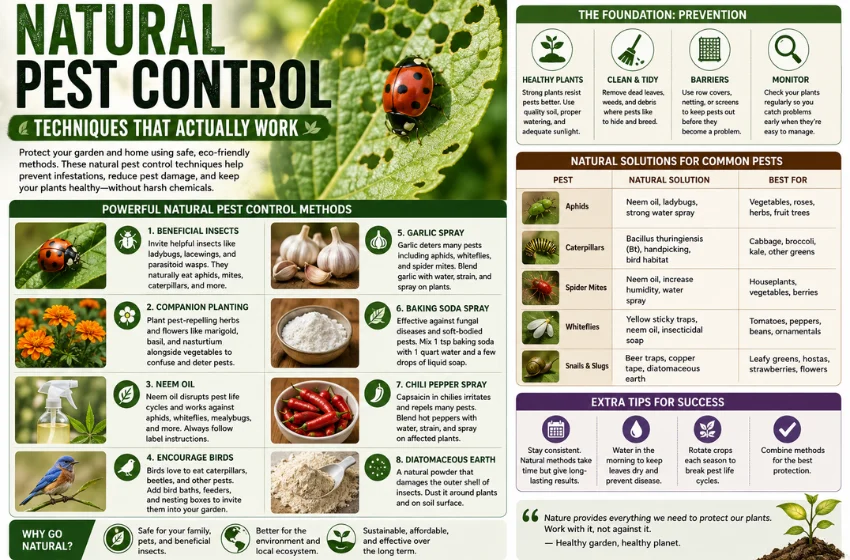
Chemical sprays aren't the only way to deal with ants, spiders, or moths. A number of natural methods, some backed by actual EPA regulation, not just marketing language, can control common pests without introducing synthetic pesticides into a home. Here's what's genuinely effective and where natural methods have limits.
What Makes a Pesticide "Natural" or "Non-Toxic"?
The term "non-toxic pest control" gets used loosely, but there's an actual regulatory category behind some of these products. The EPA maintains a list of "minimum risk pesticides" under Section 25(b) of the Federal Insecticide, Fungicide, and Rodenticide Act (FIFRA). Because the EPA has determined these products pose little to no risk to human health or the environment, it exempts them from the standard federal pesticide registration process required for most pesticides.
Only around 31 to 45 active ingredients qualify for this exemption, and they're genuinely recognizable household and kitchen items: cedar oil, citronella oil, garlic oil, peppermint oil, clove oil, soybean oil, and similar substances. A product using an ingredient outside that approved list still needs full EPA registration, no matter how "natural" its marketing sounds. Worth noting: even 25(b) exempt products are still typically required to register at the state level, so "EPA-exempt" doesn't mean "unregulated."
Prevention-First: The Foundation of Natural Pest Control
Regardless of chemical or natural approach, the most effective pest control starts with prevention: sealing entry points, removing food sources, and controlling moisture. This matters even more for natural methods, since they generally work best on smaller populations rather than established infestations. Preventing pests from establishing a foothold in the first place reduces how much you need any treatment, natural or otherwise.
Natural Repellents and Deterrents
Several EPA-recognized minimum-risk ingredients double as effective natural repellents:
- Essential oil sprays (peppermint, citrus, clove) effective against ants and spiders, particularly for smaller, visible infestations
- Cedarwood commonly used against moths, often in block or sachet form
- Diatomaceous earth (food-grade) a natural substance that dehydrates insects' exoskeletons by absorbing their protective waxy coating, effective against crawling insects like ants and roaches
- Vinegar solutions disrupt ant scent trails, making it harder for them to navigate back to food sources
These work through physical or scent-based mechanisms rather than nerve toxins, which is part of why they're gentler on people and pets but also why they tend to need more frequent reapplication than synthetic pesticides.
Non-Chemical Physical Controls
Some of the most reliable "natural" pest control doesn't involve any substance at all:
- Mechanical traps sticky traps and pheromone traps for moths and pantry pests
- Exclusion sealing cracks, gaps, and entry points, which prevents pests without any product
- Dry steam cleaning high-heat steam is EPA-recognized as effective for killing dust mites, mold, and some pest eggs on surfaces without chemical residue
Natural Remedies by Pest Type
|
Pest |
Natural Method |
Notes |
|
Ants |
Vinegar spray + peppermint oil |
Disrupts scent trails; reapply regularly |
|
Spiders |
Peppermint or citrus essential oil spray |
Repels rather than kills |
|
Moths |
Cedarwood blocks + pheromone traps |
Works best in closets/pantries |
|
Fruit flies |
Vinegar traps |
Simple DIY solution, needs daily refreshing |
|
Roaches |
Food-grade diatomaceous earth |
Apply in cracks and along baseboards |
Where Natural Methods Fall Short
Natural pest control has real limits worth being upfront about. For established infestations, especially termites, bed bugs, or large rodent populations, natural methods alone often aren't strong enough, and professional treatment (which may include synthetic options) becomes the more realistic choice. Natural repellents also typically need more frequent reapplication than synthetic pesticides, since their effects fade faster.
The safest approach for most households is combining prevention with natural methods for everyday pests, while reserving professional or chemical treatment for severe or structural infestations.
FAQ
Are natural pest control methods actually EPA-approved?
Some are. The EPA maintains a specific "minimum risk pesticide" exemption (FIFRA Section 25(b)) for around 31–45 natural active ingredients it has determined pose little to no risk. Products using ingredients outside that list still require full registration.
Do natural pest control methods work as well as chemical pesticides?
For small infestations and prevention, often yes. For severe or structural infestations (termites, bed bugs), natural methods are usually less reliable, and professional treatment is recommended.
Is diatomaceous earth safe around pets?
Food-grade diatomaceous earth is generally considered low-risk, but it can still cause respiratory irritation if inhaled in large amounts by pets or people, so it should be applied carefully in areas pets don't directly access.
Conclusion
Natural pest control isn't just a marketing term there's a real EPA framework behind certain ingredients, and methods like essential oil repellents, diatomaceous earth, and mechanical traps genuinely work for everyday pests. The key is matching expectations to the method: natural options are strong for prevention and minor problems, but severe infestations still usually call for professional help.
7. Sources
- U.S. EPA "Minimum Risk Pesticide: Definition and Product Confirmation" (epa.gov/minimum-risk-pesticides)
- U.S. EPA "Letter on Active and Inert Ingredients in Minimum Risk Pesticides"
- Cornell IPM Program "Minimum Risk Pesticides" (cals.cornell.edu)
- Nevada Division of Public and Behavioral Health FIFRA Section 25(b) Minimum Risk Pesticides List