

 David
David 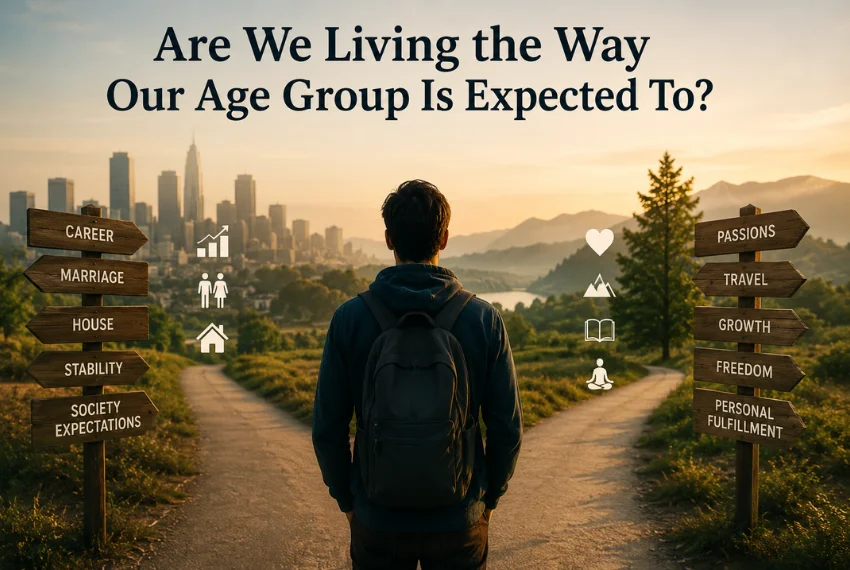
At every stage of life, there seems to be an unspoken checklist of expectations. In our twenties, we are supposed to be exploring, building careers, and forming relationships. By our thirties and forties, stability, growth, and long-term planning often take center stage. As we move into later decades, the focus shifts toward reflection, balance, and legacy. Yet, the modern world has blurred these traditional timelines, leaving many people wondering whether they are truly living the way their age group is expected to. The answer is not as simple as yes or no; instead, it reveals how personal values, cultural shifts, and individual circumstances shape the journey.
The Changing Definition of Life Stages
Historically, life stages followed a predictable pattern. Education, career, marriage, and retirement were milestones that occurred within fairly rigid timelines. Today, those boundaries are far more fluid. People are pursuing second careers later in life, delaying major decisions, or skipping them entirely. Social norms have shifted, allowing individuals to prioritize personal goals over societal expectations.
This change is largely driven by expanded opportunities and evolving values. Technology, remote work, and access to education have given people the flexibility to redefine what success looks like at any age. As a result, someone in their forties might feel just as exploratory as someone in their twenties, while a younger individual may choose to prioritize stability early on. The traditional model still exists, but it no longer dictates the path for everyone.
Social Pressure Versus Personal Fulfillment
Despite these changes, societal expectations still exert influence. Comparisons often arise through social media, family conversations, and cultural narratives. Seeing peers achieve certain milestones can create a sense of urgency or even inadequacy. Thoughts like “Am I behind?” or “Should I have accomplished more by now?” are common across all age groups.
However, personal fulfillment rarely aligns perfectly with external benchmarks. Living according to expectations may provide a sense of validation, but it does not always translate to genuine happiness. Many individuals who follow a conventional path discover that their priorities evolve over time. Choosing fulfillment over expectation can be difficult, but it often leads to a more authentic and satisfying life.
Redefining Success at Any Age
One of the most significant shifts in modern living is how success is defined. Instead of being tied strictly to career or financial milestones, success has become more holistic. It now includes mental well-being, meaningful relationships, and a sense of purpose.
For example, someone in midlife might choose to step away from a high-pressure career to focus on personal interests or community involvement. A place like Morada Temple could represent not just a physical setting, but a symbolic retreat where individuals reconnect with their values and redefine what success means to them. Whether through travel, creative pursuits, or giving back, people are increasingly embracing the idea that it is never too late to reshape their path.
This broader perspective allows individuals to move beyond rigid expectations and instead craft lives that reflect their unique priorities.
The Role of Cultural and Generational Shifts
Different generations experience different expectations, often shaped by economic conditions, technological advancements, and cultural values. For example, younger generations tend to prioritize work-life balance and personal fulfillment more than previous ones, while older generations may place a stronger emphasis on stability and long-term achievement.
Cultural diversity also plays a critical role. In some communities, traditional milestones remain deeply important, while others encourage more independence and individuality. These varying influences create a complex landscape where expectations are not universally defined.
As a result, it becomes clear that there is no single standard for how any age group should live. What feels right for one person may not resonate with another, even within the same generation.
Embracing Flexibility and Individual Paths
The question of whether we are living as expected ultimately leads to a deeper realization. Expectations are guidelines, not rules. They can provide direction, but they should not limit personal growth or happiness.
Flexibility is key to navigating modern life. People are increasingly allowing themselves to pivot, restart, or explore new opportunities regardless of age. This mindset encourages resilience and adaptability, qualities that are essential in a rapidly changing world.
Instead of focusing on whether we meet certain milestones at the “right” time, it may be more meaningful to ask whether our choices align with our values. Living authentically often requires stepping outside of expectation and embracing uncertainty.
Conclusion
In the end, the idea of living according to age-based expectations is becoming less relevant. While these expectations can still provide a framework, they no longer define success or fulfillment. Each individual’s journey is shaped by personal goals, experiences, and evolving priorities. Rather than measuring life against a predetermined timeline, the more important question is whether we are living in a way that feels true to ourselves. For more updates visit Mindsflip.