
 lara
lara 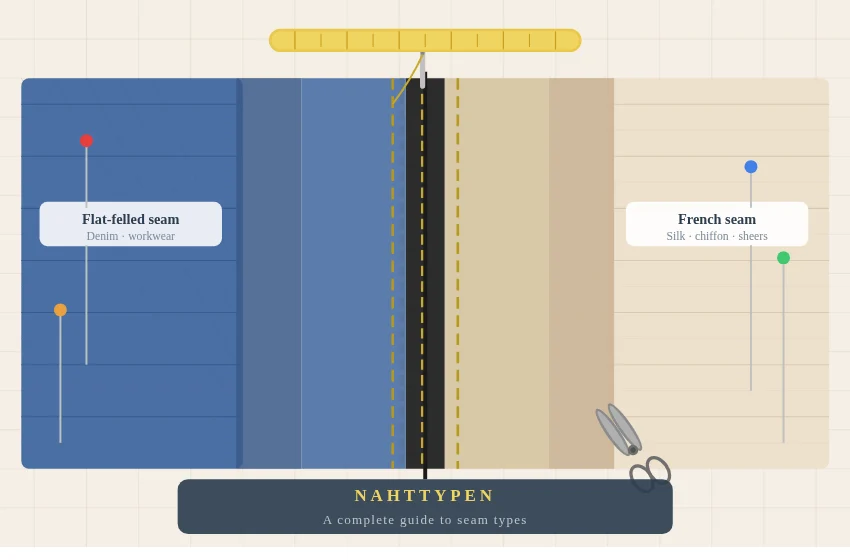
You've picked up fabric, threaded your needle, and you're ready to sew. But then the question hits you: which seam do I actually use here? If you've ever finished a garment only to watch it fray, pucker, or fall apart after two washes, the answer almost always comes back to the same thing. You picked the wrong seam type. This guide breaks down nahttypen clearly, so you stop guessing and start sewing with purpose.
What Does Nahttypen Mean?
Nahttypen is a German word meaning 'types of seams.' It refers to the multiple methods used to join pieces of fabric. In garment construction, textile engineering, and home sewing, it covers every seam option from the simplest stitch to the most technical. Naht means seam. Typen means types or categories.
Together, nahttypen literally means 'types of seams.' The word is widely used in German sewing schools, tailoring manuals, and industrial sewing documentation.
You'll encounter it in fashion programmes, professional tailoring courses, and sewing guides. Once you understand what each seam does, the concept is straightforward.
Why Does Choosing the Right Seam Matter?
Pick the wrong seam, and your project pays for it. It's as simple as that.
The right seam ensures durability so your clothing can withstand stress and washing. It also affects comfort, since some seams lie flat and feel smooth against the skin. A well-chosen seam gives garments a clean, professional finish.
Selecting the correct nahttypen based on fabric behaviour prevents common sewing problems such as fraying, puckering, or seam failure.
Think of a seam like the foundation of a house. If it's weak or wrong for the ground beneath it, the whole structure suffers. The same logic applies to every garment you sew.
The Most Important Nahttypen Explained
1. The Plain Seam (Straight Seam)
The plain seam is the most common nahttyp in sewing. It joins two pieces of fabric by placing them right sides together and stitching along the edge. It's best for everyday garments like shirts, trousers, and dresses made from woven fabrics.
It's simple, but it still needs finishing techniques like zigzag stitching or serging to stop fraying. If you're new to sewing, this is where you start. It's straightforward, forgiving, and fast.
2. The French Seam
The French seam hides all raw edges inside the seam itself, giving a clean finish on both the inside and outside of a garment. It works best on lightweight or sheer fabrics like silk, chiffon, and fine linens.
It takes two passes on the machine. But the result looks professional, like something from a high-end boutique. It's one of the cleaner nahttypen you can learn.
3. The Flat-Felled Seam
The flat-felled seam is the strongest nahttyp for heavy-duty garments. It folds fabric edges over each other and stitches them down twice, leaving no raw edges exposed. You'll spot it on the inside leg seams of most jeans.
This seam is built to last. It handles repeated stress and washing without breaking down. It's the go-to for denim, workwear, and sportswear.
4. The Zigzag Seam
The zigzag seam is the right nahttyp for stretchy fabrics. Its flexible stitch moves with the fabric instead of snapping under tension. It's the standard choice for sportswear, swimwear, and underwear.
If you've ever had a seam pop mid-run or mid-workout, it's because someone used a straight stitch on a stretch fabric. The zigzag seam fixes that problem directly.
5. The Overlock Seam
The overlock seam trims, sews, and finishes a fabric edge all at once. It uses a special serger or overlock machine and is the standard seam in most factory-made clothing.
You've seen this seam on the inside of almost every T-shirt you own. It's fast, clean, and built for high volume. Perfect for knit fabrics, hoodies, and activewear.
6. The Bound Seam
The bound seam covers raw edges with a separate strip of fabric or binding. It looks neat on the inside of unlined garments and is common in couture sewing, jackets, and blazers.
7. The Lapped Seam
The lapped seam overlaps one fabric piece on top of another and stitches both layers down. It's flat, strong, and widely used in leather, upholstery, and sportswear where bulk matters.
How to Choose the Right Nahttypen
Most beginners get stuck here. But the choice becomes logical when you ask three simple questions.
Question 1: What fabric am I using? Lightweight fabrics like silk or chiffon need French seams that close off raw edges. Knit fabrics need zigzag or overlock seams. Heavy fabrics like denim or canvas need flat-felled seams for maximum strength.
Question 2: How much stress will this seam take? A seam on a shoulder bag takes more stress than one on a cushion cover. Match the seam strength to the job it's doing.
Question 3: Does the inside finish matter? For lined garments, a plain seam works fine inside. For unlined jackets or sheer tops, you need a French or bound seam so the inside looks as good as the outside.
Quick Comparison: Nahttypen Side by Side
|
Seam Type |
Best For |
Strength |
Skill Level |
|
Plain Seam |
Everyday garments |
Medium |
Beginner |
|
French Seam |
Silk, chiffon, sheers |
Medium |
Intermediate |
|
Flat-Felled |
Denim, workwear |
High |
Intermediate |
|
Zigzag |
Stretch fabrics |
Medium |
Beginner |
|
Overlock |
Knits, activewear |
Medium-High |
Beginner |
|
Bound Seam |
Jackets, couture |
Medium |
Advanced |
|
Lapped Seam |
Leather, upholstery |
High |
Intermediate |
Practical Tips to Get Nahttypen Right
Before sewing, always test your chosen nahttyp on a scrap piece of the same fabric. This saves you from making a costly mistake on the actual garment.
Stitch length and tension are two factors that make or break a seam. Shorter stitches give more durability and work best for seams under stress. A well-adjusted tension gives even stitches on both sides of the fabric.
A few more habits worth building:
- Use high-quality thread that matches your fabric weight
- Match needle size to fabric thickness. A denim needle on silk will destroy it.
- Press every seam with an iron after sewing. It makes a bigger difference than most beginners expect.
The Bottom Line on Nahttypen
Nahttypen isn't complicated. It's just knowing which seam fits which job.
Get that right, and your garments look better, last longer, and give you far less trouble. Get it wrong, and even the best fabric can't save you.
Start simple. Practice often. The right seam makes all the difference. For more informational ideas msut visit Mindsflip.